Why Federal AI Regulation Is Becoming the Biggest Policy Fight in Washington
For the first time, Washington is inching closer to shaping federal AI regulation, but the real conflict isn’t about how artificial intelligence should be controlled—it’s about who gets to regulate it. As the federal government struggles to establish consumer-focused AI rules, states have rapidly taken the lead.
In the absence of strong federal AI regulation, California introduced SB-53, a major AI safety bill, while Texas passed the Responsible AI Governance Act to prevent intentional misuse of AI systems.
Tech companies and AI innovators argue that these state-level rules create a patchwork system that harms innovation.
How States Are Shaping the AI Landscape Ahead of Federal AI Regulation
Without a unified federal AI regulation standard, over 38 states have passed more than 100 AI-related laws targeting deepfakes, disclosures, and government use of AI. These laws often address issues faster than Congress, which has introduced hundreds of bills but passed very few.
New York Assembly Member Alex Bores, who authored the RAISE Act, argues that trustworthy AI wins in the long term—and states must move quickly to protect the public.
Why Tech Leaders Want One Federal AI Regulation Standard
Pro-AI political groups are pouring millions into campaigns demanding nationwide federal AI regulation that overrides state laws. Leading the Future—backed by Andreessen Horowitz, OpenAI President Greg Brockman, Perplexity, and Palantir co-founder Joe Lonsdale—has raised over $100 million for this cause.
They argue that a state-by-state system slows down development and weakens America’s competitive edge against China.
The NDAA and White House Executive Order Push for Federal AI Regulation
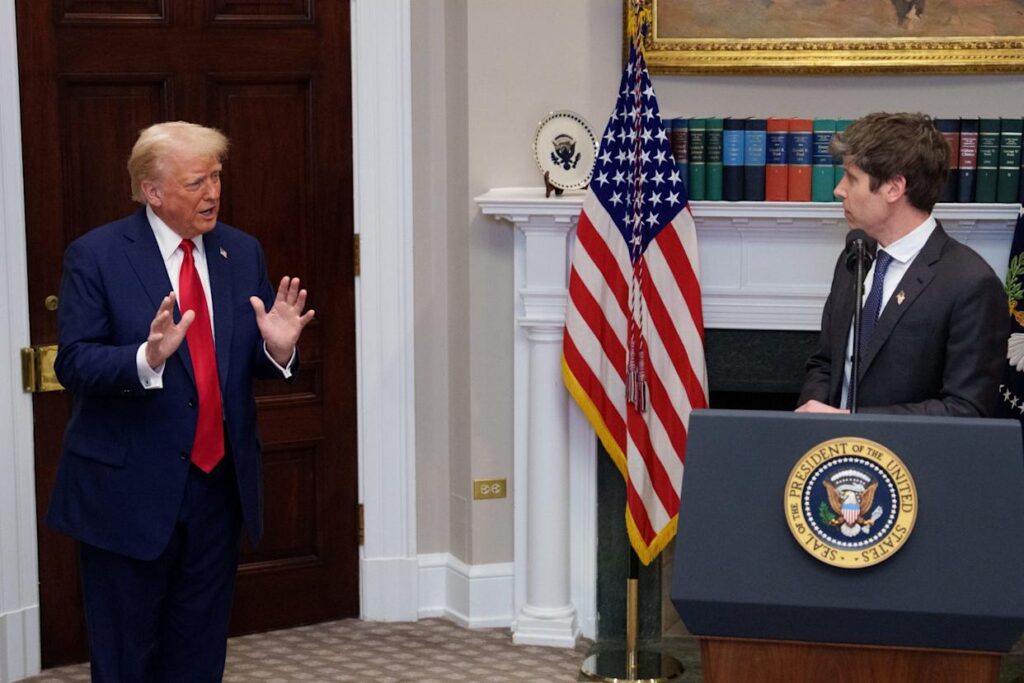
House lawmakers are exploring ways to insert language into the National Defense Authorization Act (NDAA) that would prevent states from regulating AI. Simultaneously, a leaked White House executive order outlines the creation of an “AI Litigation Task Force” designed to challenge state laws deemed burdensome.
This order would give AI & Crypto Czar David Sacks major influence over shaping federal AI regulation, surpassing the traditional role of the White House Office of Science and Technology Policy.
Experts Argue the Patchwork Problem Is Overstated
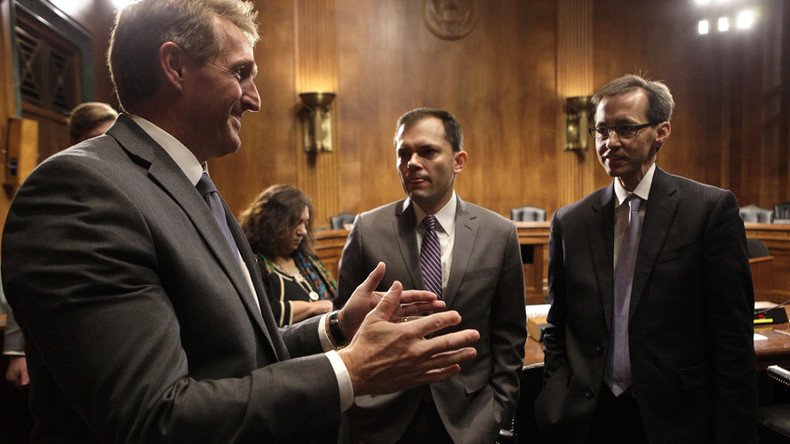
Cybersecurity expert Bruce Schneier and data scientist Nathan E. Sanders argue that concerns about conflicting state laws are exaggerated. They point out:
- Tech companies already operate under tougher EU AI rules.
- Many industries function with varied state regulations.
- The real motive behind opposing state laws is avoiding accountability.
What a Federal AI Regulation Standard Could Look Like
Rep. Ted Lieu and the bipartisan House AI Task Force are drafting a 200+ page megabill aimed at establishing practical federal AI regulation covering:
- Fraud prevention
- Deepfake penalties
- Whistleblower protections
- Academic compute resources
- Safety testing for large AI models
The proposal would require major AI labs to test their systems and publicly release results, but it stops short of government-run evaluations like those proposed by Sens. Hawley and Blumenthal.
Lieu says his goal is simple: pass a bill that can realistically survive a Republican-controlled House, Senate, and White House.
Internal Links (Insert in Your WordPress Editor)
- AI News & Updates → dailyseeder.com/Tech-news
- Tech & AI Category → dailyseeder.com/category/tech-ai
- Global Policy Insights → dailyseeder.com/global-news
External Links
- EU AI Act Overview → https://artificialintelligenceact.eu
- NIST AI Risk Management Framework → https://www.nist.gov/itl/ai-risk-management-framework
- OECD Artificial Intelligence Policy Observatory → https://oecd.ai