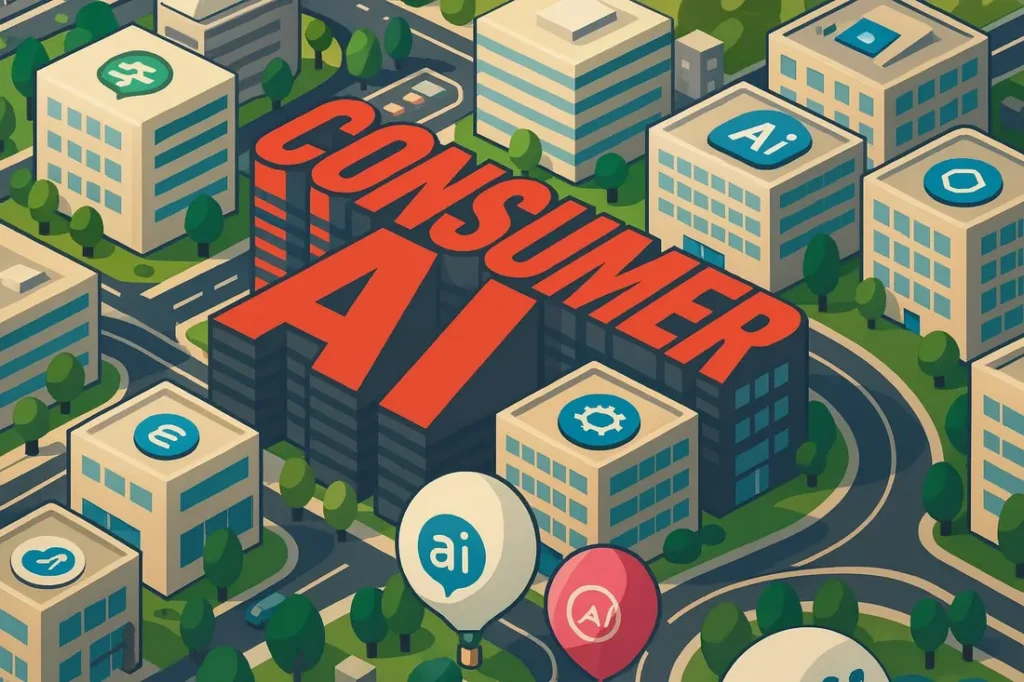
Consumer AI Startups Still Struggle to Build Long-Term Staying Power
Even three years after the generative AI boom began, consumer AI startups continue to face major challenges in achieving long-term success. While large language models like ChatGPT gained rapid consumer adoption, most specialized AI apps designed for everyday users have failed to deliver sustainable growth.
Venture capitalists believe the issue isn’t a lack of innovation—but timing, platform maturity, and limitations of current devices.
Why Consumer AI Startups Haven’t Taken Off Yet
At TechCrunch’s StrictlyVC event, Goodwater Capital co-founder Chi-Hua Chien explained that many early consumer AI startups were quickly overtaken by advances in core AI models.
Early apps focused on AI-generated video, audio, and images initially impressed users. However, once foundation models like OpenAI’s Sora emerged—and open-source video models from China entered the market—many of those startups lost their competitive advantage.
Chien compared this trend to early iPhone flashlight apps, which became obsolete once Apple added the feature natively to iOS.
Platform Stabilization Is Critical for Consumer AI Startups
According to investors, consumer AI startups are still operating in a “platform formation” phase—similar to smartphones before 2010.
Chien believes AI is approaching a stabilization moment similar to the early mobile era that produced Uber and Airbnb. He pointed to Google’s Gemini reaching near parity with ChatGPT as a signal that the AI platform layer is maturing.
Once platforms stabilize, more defensible and scalable consumer applications are likely to emerge.
Are Smartphones Holding Consumer AI Back?
The Device Problem Facing Consumer AI Startups
Elizabeth Weil, founder of Scribble Ventures, described today’s consumer AI market as an “awkward teenage phase.” Both she and Chien agree that smartphones may be limiting AI’s full potential.
Smartphones are used hundreds of times per day but capture only a small fraction of a user’s environment. This limits how effectively consumer AI startups can deliver contextual, always-on experiences.
Weil even suggested that five years from now, consumer AI products may no longer be designed primarily for smartphones.
New AI Devices Could Unlock the Next Growth Wave
To overcome device limitations, tech companies and startups are racing to build new AI-first hardware.
Examples include:
- A rumored screenless AI device from OpenAI and former Apple designer Jony Ive
- Meta’s Ray-Ban smart glasses, controlled via subtle wrist gestures
- Experimental AI pins, pendants, and rings from startups (with mixed results)
While hardware innovation may help, not every successful consumer AI startup will require a new device.
High-Potential Use Cases for Consumer AI Startups
Chien believes personalized AI financial advisors tailored to individual users could become a breakout category. Weil expects “always-on” AI tutors to become widespread, even if delivered through smartphones.
These use cases highlight how consumer AI startups can succeed by focusing on personalization, utility, and long-term engagement.
Why AI-Powered Social Networks May Fail
Despite enthusiasm around AI-driven social platforms, both investors expressed skepticism.
Some startups are building social networks populated by AI bots that interact with user content. Chien warned this approach undermines the core value of social media.
“Social becomes a single-player experience,” he said. “People want to know there are real humans on the other side.”
Stay ahead of others
For more insights, trends, and real-time news, explore our
- Crypto News:
dailyseeder.com/category/crypto-news/ - Market Analysis:
dailyseeder.com/category/market-analysis/ - Business & Startups:
dailyseeder.com/category/business/ - Tech & AI:
dailyseeder.com/category/tech-ai/