🌊 Tropical Storm Melissa Forms in the Caribbean Sea
Tropical Storm Melissa has officially formed in the Caribbean Sea, confirming that this year’s Atlantic hurricane season is far from over. The system is rapidly intensifying over unusually warm waters and could bring heavy rain, strong winds, and life-threatening flooding to the northern Caribbean later this week.
According to the National Hurricane Center (NHC), Melissa was located about 300 miles south of Haiti late Tuesday, with maximum sustained winds of 50 mph and the potential to reach hurricane status by Saturday.
📘 External Source: National Hurricane Center Advisory
☔ Heavy Rain and Wind Threats From Tropical Storm Melissa
Meteorologists warn that Tropical Storm Melissa could dump more than a foot of rain over parts of Hispaniola, particularly across Haiti and the Dominican Republic. The region’s mountainous terrain makes it highly vulnerable to mudslides and flash flooding, especially where the soil is already saturated.
- Rainfall potential: Up to 12–15 inches in some areas
- Winds: Sustained 50 mph, with stronger gusts
- Storm surge: Localized coastal flooding possible
“The combination of torrential rain and rugged topography is a recipe for flash flooding and landslides,” forecasters at CNN Weather reported.
📘 External Source: CNN Weather Storm Report
🌀 Possible Hurricane Upgrade – Melissa’s Intensification Outlook
Forecasters at the National Hurricane Center predict that Tropical Storm Melissa could strengthen into a Category 1 hurricane by the weekend. The storm is expected to feed on record-warm Caribbean waters — described as “rocket fuel for tropical systems.”
This rapid intensification trend is becoming more frequent due to global warming and rising ocean temperatures, largely driven by fossil fuel pollution. Earlier this year, storms like Erin, Gabrielle, and Humberto underwent similar explosive strengthening.
📘 External Source: NOAA Climate Report on Rapid Intensification
🗺️ Two Possible Tracks for Tropical Storm Melissa
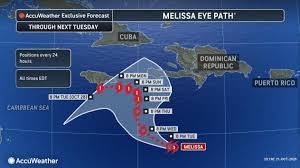
Forecast models suggest two main paths for Tropical Storm Melissa, though its exact track remains uncertain.
Scenario 1: Direct Hit on Hispaniola
If Melissa turns north later this week, it could move dangerously close to Hispaniola, bringing widespread flooding, power outages, and infrastructure damage to both Haiti and the Dominican Republic.
Scenario 2: Drift Toward Central America
Alternatively, the storm could track westward across the Caribbean, nearing Nicaragua or Honduras next week. In this path, rainfall totals would likely be lower, though rough surf and high seas would still affect surrounding islands.
📘 External Source: The Weather Channel Hurricane Tracker
🌴 Tropical Storm Melissa’s Impact on the Caribbean Islands
Several nations across the northern Caribbean are now under watches and warnings:
- Haiti: Hurricane Watch
- Jamaica: Tropical Storm Watch
- Dominican Republic: Flash Flood Alerts
- Puerto Rico: Heavy Rainfall Advisory
Tropical Storm Melissa could affect millions across the region, with prolonged periods of wind, rain, and coastal flooding through the weekend.
🌧️ Internal Link Suggestion: How to Prepare for Caribbean Hurricanes in 2025
🇺🇸 Will Tropical Storm Melissa Hit the U.S.?
At this stage, it’s unlikely — but not impossible — that Tropical Storm Melissa will directly strike the mainland United States.
However, forecasters caution that rough surf and rip currents could develop along the U.S. East Coast by next week. Florida may face indirect impacts if Melissa turns north later than expected, bringing rain and gusty winds to parts of Cuba and the Bahamas as well.
Historically, late-season systems can surprise forecasters. Notably, Hurricane Nicole (2022) hit Florida in November, while Hurricane Zeta (2020) struck Louisiana in late October.
📘 External Source: NOAA Hurricane Archives
🔥 Why Tropical Storm Melissa Matters
Tropical Storm Melissa is the 13th named storm of the 2025 Atlantic hurricane season, but notably the first to form in the Caribbean Sea.
The absence of earlier storms allowed the Caribbean’s surface waters to heat up significantly — creating an ideal breeding ground for powerful storms. Melissa’s development underscores how warmer oceans are intensifying storm behavior worldwide.
🕐 What’s Next for Tropical Storm Melissa?
As the system continues to evolve, forecasters will refine predictions about its track, wind speeds, and rainfall totals.
The National Hurricane Center will issue frequent updates, and residents of Hispaniola, Jamaica, and Puerto Rico should monitor local advisories and prepare for possible hurricane conditions by the weekend.
🧭 Internal Link Suggestion: Atlantic Hurricane Season 2025 Tracker
⚠️ Safety Tips During Tropical Storm Melissa
If you live in areas likely to be affected by Tropical Storm Melissa, follow these safety steps:
- Keep an emergency kit with food, water, and medicine.
- Charge your devices and backup power sources.
- Secure loose outdoor items.
- Avoid driving through flooded areas.
- Stay informed via local weather alerts and official updates.
📘 External Source: Ready.gov Hurricane Safety Guide
🌤️ Final Thoughts
Tropical Storm Melissa serves as a stark reminder that the Atlantic hurricane season can still deliver powerful systems well into late October. While the storm’s final destination remains uncertain, its potential for flooding, wind damage, and disruption across the Caribbean is undeniable.
As forecasters continue tracking Melissa’s path, residents should remain alert and prepared. The Atlantic hurricane season officially ends on November 30, but as history has shown — nature doesn’t always follow the calendar.